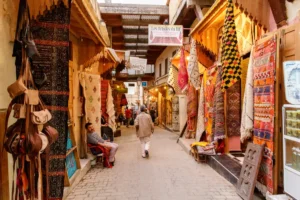
Merzouga represents the definitive gateway to the Saharan nomadic tradition. This desert town borders the Erg Chebbi, Morocco’s largest sand dunes, and was established on routes that historically connected trans-Saharan trade. Today, it continues as a cultural center for Tuareg and Berber nomadic communities, who maintain ancestral lifestyle practices and desert knowledge while adapting to contemporary pressures through tourism integration.
Tuareg Culture and Contemporary Identity
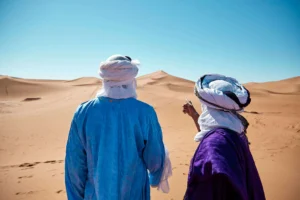
The Tuareg people are known as the blue people of the Sahara due to the indigo dye of their tagelmust veils. They represent Saharan nomadic specialists whose existence was historically defined by camel herding and caravan trading. Their profound desert knowledge enables navigation and survival in extreme conditions across a vast geographic range including Morocco, Algeria, Mali, Niger, and Libya.
Social Structures and Gender Autonomy
Tuareg culture is characterized by distinctive social structures that often contrast with broader regional norms. Women enjoy significant autonomy, including property ownership of camels, tents, and possessions. They typically retain their birth names after marriage and have the freedom to initiate divorce without social stigma. This matrilineal emphasis ensures that family identity often flows through the mother’s line, with women serving as the primary keepers of oral and written literature traditions.
The Patterns of Daily Nomadic Life
Daily life is governed by seasonal movements and the constant search for resources. Traditional cycles involve moving herds to remote water sources during summer droughts and toward available pasture after winter rains. While many families have established semi-permanent homes due to climate pressures, the deep understanding of water availability and vegetation cycles remains a vital cultural pillar.
Tent Life and Domestic Routine
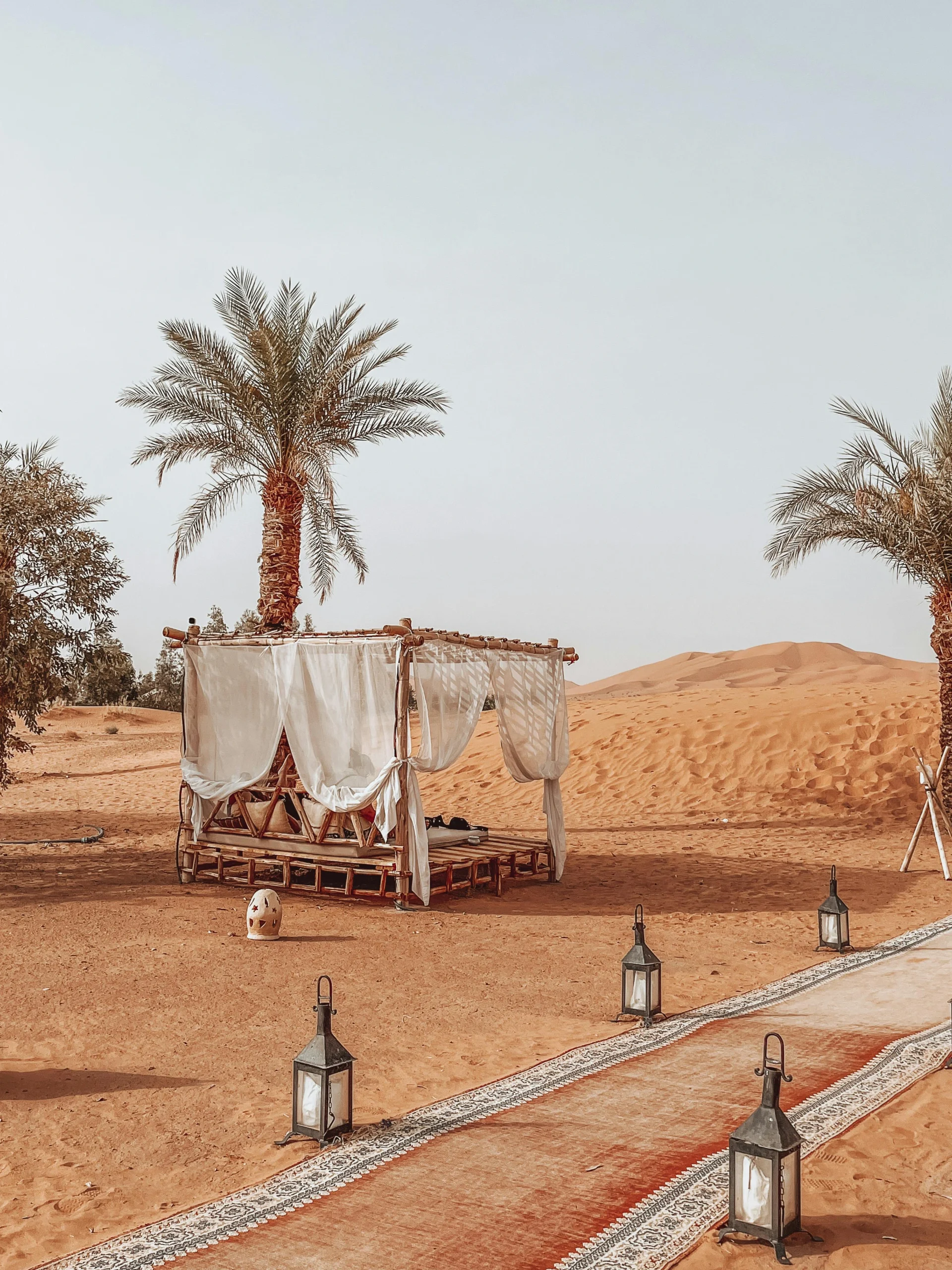
The nomadic tent, known as a Tahamaheq, is crafted from woven goat hair strips that are water resistant and temperature regulating. These structures are designed for rapid assembly and disassembly to meet nomadic requirements. Domestic work is a shared responsibility, with women managing water collection, cooking, and textile production, while men focus on herding, well management, and guest entertainment. Water management is the most critical resource, and the ritual of sharing water forms the foundation of Saharan hospitality.
Diet and Livestock Mastery
The dromedary camel is central to Tuareg life, adapted perfectly for the extreme heat. Herd size is a primary measure of wealth and social status. The nomadic diet relies heavily on camel milk, which is more nutritious and heat tolerant than cow milk, supplemented by grains like millet and barley, dates as an energy source, and meat reserved for special occasions and guests.
Navigating the Nomadic Experience in Merzouga
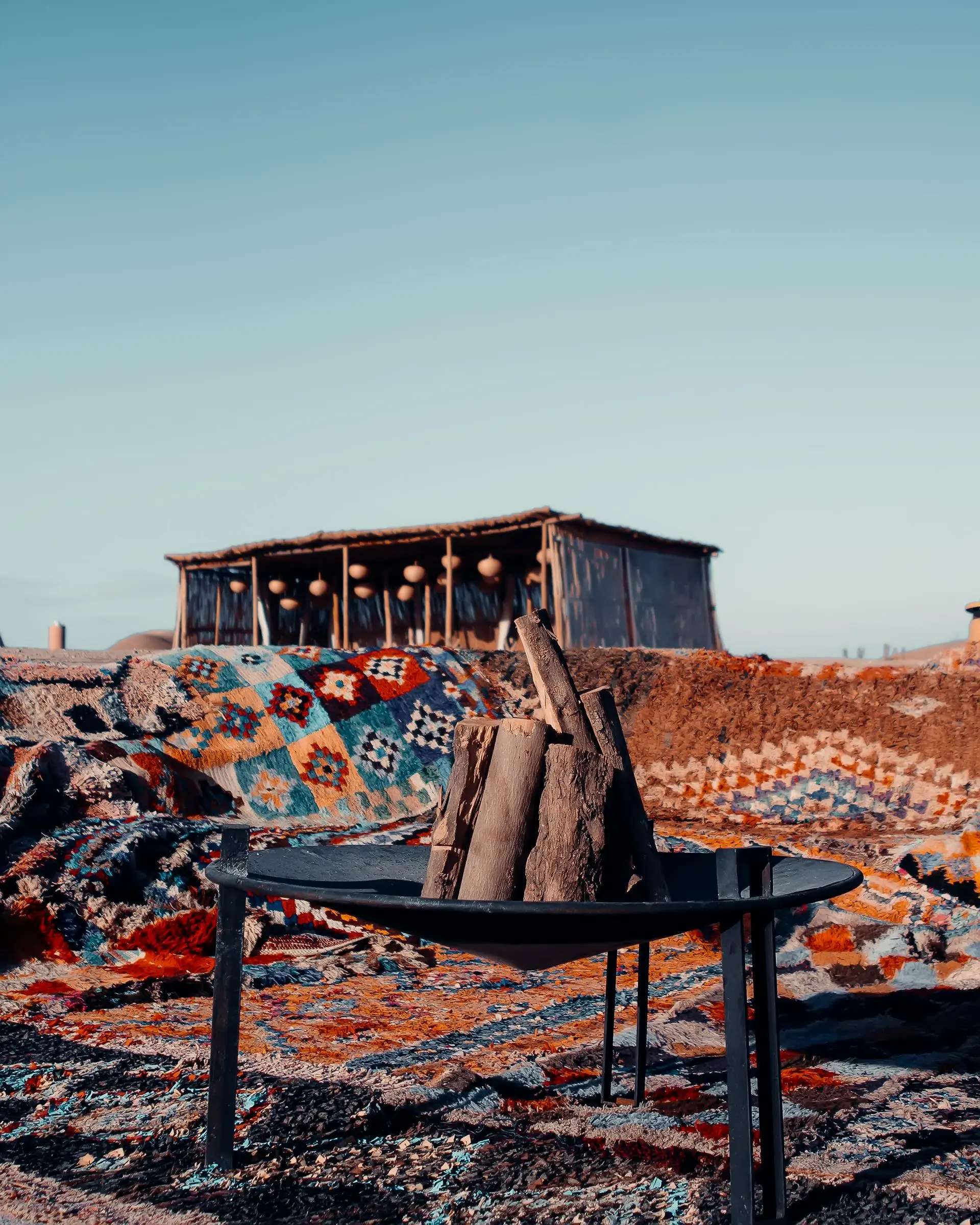
Contemporary Merzouga offers various ways to engage with this ancient civilization. Options range from accessible camel trekking and commercialized desert camps to more immersive homestay opportunities with actual Tuareg families. Camel treks provide an introduction to the dune scenery and the atmosphere of the desert, while overnight stays allow for deeper observation of camp life and the desert night sky.
Homestay Integration and Cultural Immersion
For those seeking a profound connection, homestays involve staying with a semi-nomadic family in their traditional tent. This experience offers authentic living conditions, where guests participate in daily tasks like herding and cooking. It requires a mindset of flexibility and a genuine curiosity about people, as visitors depend on the family for navigation and safety in an environment without modern comforts like running water.
Responsible Tourism and Ethical Engagement
Meaningful engagement with nomadic communities requires a respectful approach. Photography should always be based on permission, recognizing people’s autonomy and dignity rather than treating their lives as an exhibition. Economic fairness is equally important, ensuring that guides earn fair wages and that tourism supports families directly.
While tourism provides an essential livelihood as traditional herding faces environmental challenges, travelers should be aware of the complexities of cultural commodification. Approaching nomadic communities with humility and openness allows for a human connection that transcends language barriers and cultural differences.
Ultimately, a day with the Tuareg offers a perspective shifting experience. It provides an appreciation for the remarkable adaptation enabling human survival in extreme environments and connects travelers to a lifestyle that has shaped Saharan civilization for centuries. By meeting locals with respect, you participate in a tradition of storytelling and hospitality that continues to endure against the shifting sands of time.