Henna art represents an ancient Middle Eastern and North African aesthetic tradition spanning millennia. In Morocco, this plant based dye is more than simple body decoration; it is an essential component of life’s major celebrations. Whether marking a wedding, a festival, or a spiritual transition, henna serves as a temporary adornment that functions simultaneously as a beauty enhancement, a ceremonial marker, and a form of spiritual protection.
The Cultural Significance of Henna
Historically, henna has deep foundations in Islamic and Berber traditions. Known as fenna in Moroccan Arabic, it is frequently associated with blessing and good fortune. The application itself is a profound social ritual where friends and family gather around the recipient, allowing conversation and laughter to flow while the intricate patterns take shape. This shared aesthetic experience strengthens communal bonds and marks significant transitions in a woman’s life.
The most iconic celebration is Laylette al Henna, the night of henna held before a wedding. During this hours long ceremony, the bride is prepared and blessed through extensive and intricate designs. While weddings are the primary showcase for professional artists, henna is also applied during Eid celebrations, the New Year, or simply as a regular form of aesthetic enjoyment in the marketplace culture of Marrakech.
Design Traditions and Symbolic Meaning
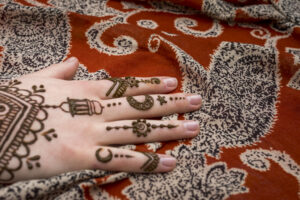
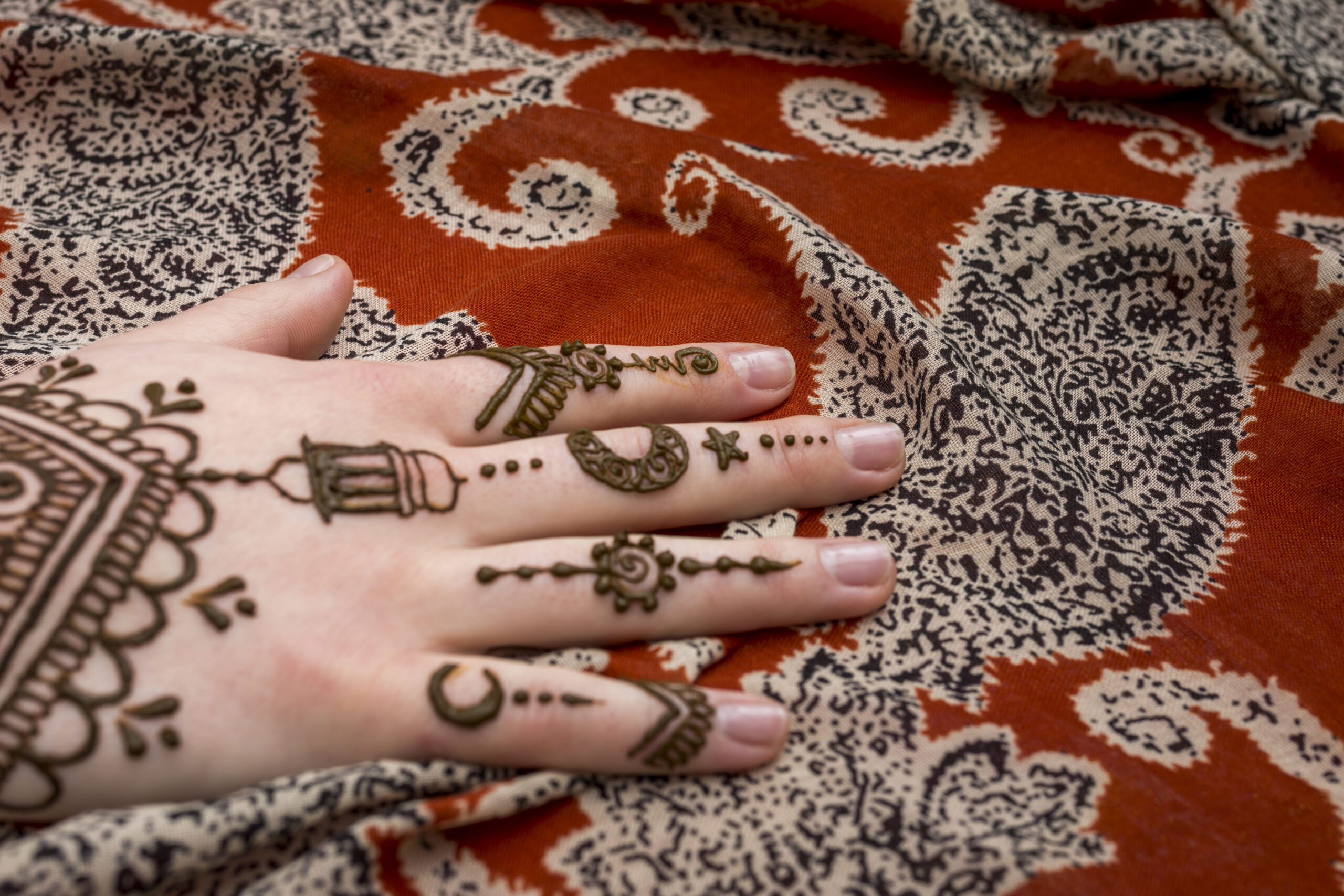
Moroccan henna is famous for its distinct visual language. Unlike the flowing floral styles often seen in South Asia, Moroccan designs emphasize bold geometric patterns including triangles, diamonds, and symmetrical lines. In Marrakech and the broader Berber traditions, these patterns often focus on the centers of the palms and delicate finger decorations, resulting in a look that is both modern and ancient.
Each motif carries its own symbolic weight. Hand shaped designs and specific eye motifs are frequently used for protection against negative energy. Other symbols represent fertility and blessing, creating a magical perimeter of sorts around the wearer. For the artisan, these designs are a signature of their skill, with master artists developing recognizable styles that indicate their regional or tribal origins.
The Application Process and Quality
A professional henna application is a methodical craft. The artist uses a fine applicator to trace patterns freehand, ensuring smooth and consistent lines. The paste must be the proper thickness to stain deeply, typically revealing a reddish brown or burgundy tone over 24 to 48 hours. Quality henna is made from natural ingredients and avoids chemical additives, lasting anywhere from two to three weeks before naturally fading.
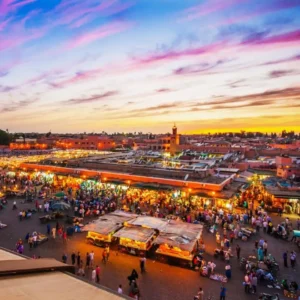
Travelers in Marrakech will encounter a dichotomy between the quick marketplace henna found in Jemaa el Fnaa and the work of professional independent artists. While the marketplace offers convenience and affordability, professional artists provide a more leisurely and detailed experience, often visiting guests at their riads to ensure the artistry is honored as a tradition rather than a mere commodity.
Preserving the Aesthetic Legacy
To ensure the longevity of a henna design, the first 48 hours are critical. Avoiding water and allowing the stain to set with the skin’s natural oils helps achieve a darker, more resilient color. As the design gradually fades, it leaves behind a temporary memory of the cultural engagement. In Marrakech, henna remains a vital economic force for women, providing a path to financial independence and ensuring that this ancient artistic legacy is transmitted to the next generation.
Ultimately, getting henna in Marrakech connects the wearer to centuries of feminine aesthetic tradition. It is a moment of artistic expression that transcends language barriers, inviting travelers to participate in the storytelling and hospitality that defines the Moroccan spirit. Approach the experience with respect for the artisan’s craft, and you will carry a beautiful, meaningful reminder of the Sahara’s enduring soul.