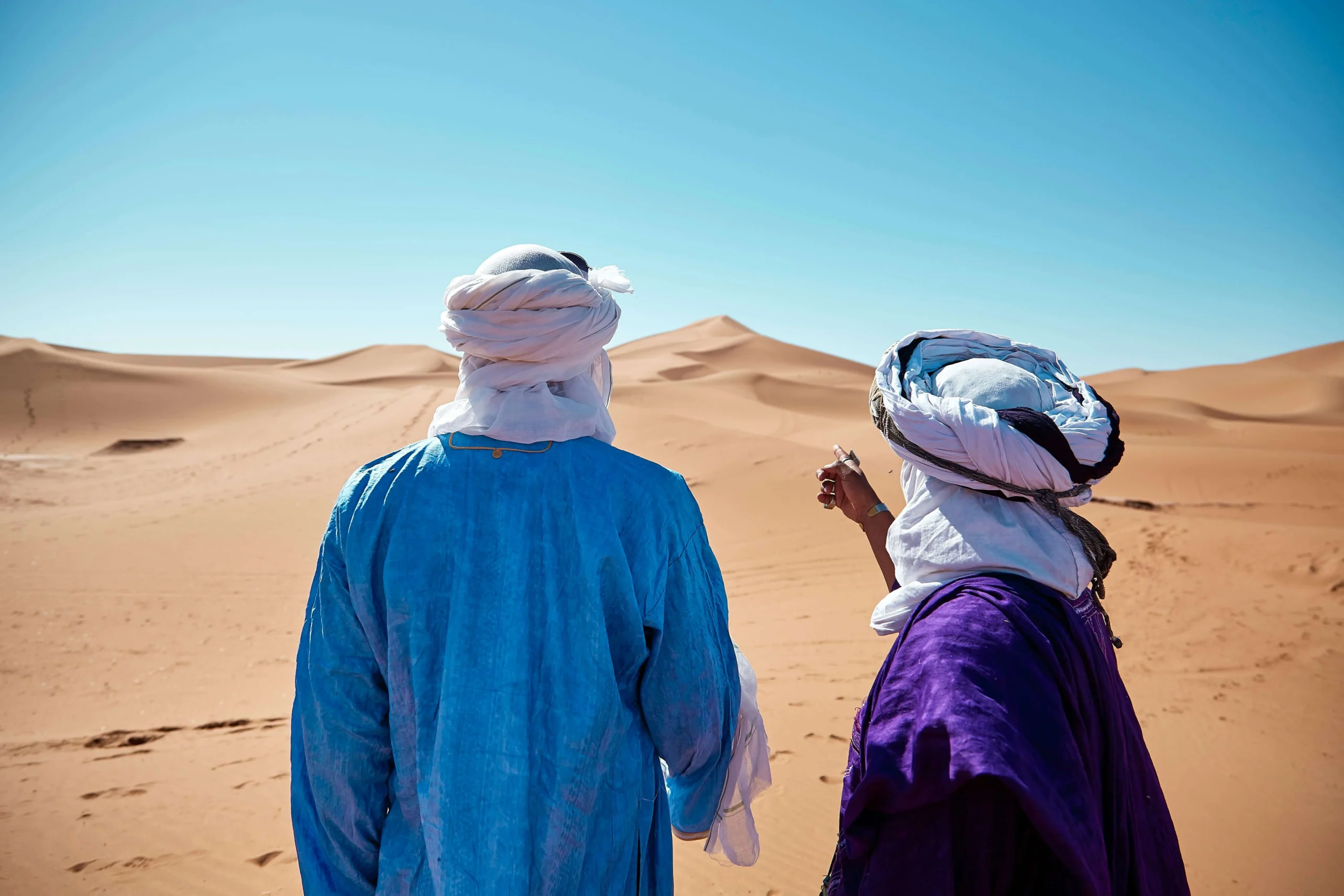
Storytelling represents humanity’s oldest entertainment, education, and memory preservation technology. Long before written language, oral traditions transmitted cultural knowledge and identity across generations. In the Saharan heartland, despite extreme geographic isolation and harsh climatic conditions, these rich traditions remain a primary source of life and wisdom, functioning as both a social glue and a living historical archive.
The Cultural Significance of the Spoken Word
In the Sahara, a story is never told in isolation. It serves critical educational functions, encoding practical survival techniques and environmental knowledge into narrative adventures. It acts as a historical chronicle, preserving community origins and significant past events through genealogical memory. These stories also drive psychological development, using character arcs to teach emotional intelligence and social skills to the younger generation.
Beyond education, storytelling reinforces cultural identity by embedding values like hospitality, honor, and courage into the community fabric. Shared narratives create collective social bonds, asserting a distinctive cultural identity against external pressures. It is a form of generational continuity where the young learn the cultural legacy, ensuring the succession of the tradition through the ages.
Spiritual and Protective Roles
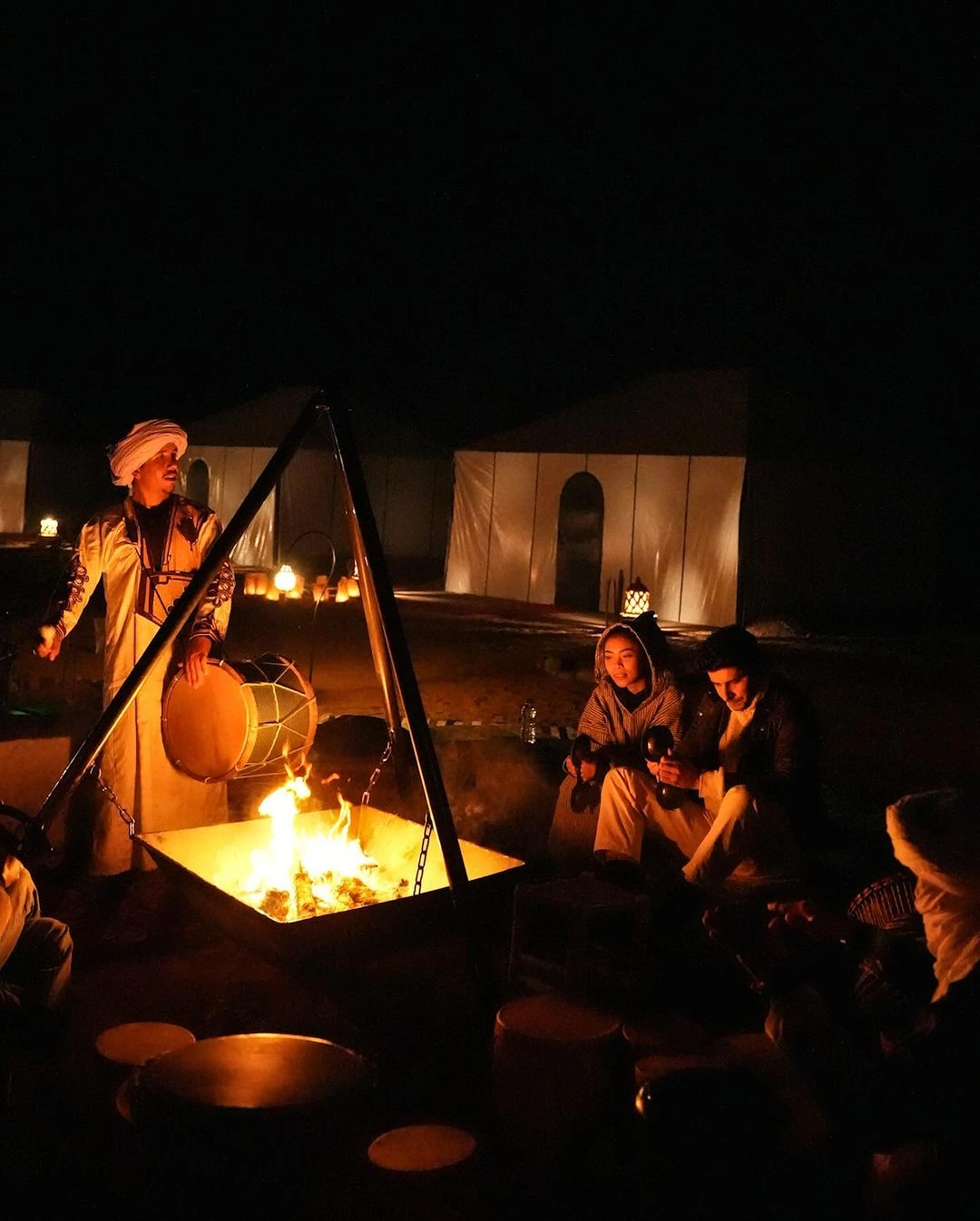
There is a profound spiritual dimension to the desert campfire. Storytelling often bridges the gap between our world and the supernatural, depicting cosmic justice and the spiritual consequences of one’s actions. In the vulnerability of the desert darkness, certain stories are believed to offer spiritual safeguarding, preserving sacred knowledge and protective formulas that have been handed down with ceremonial respect.
Major Legends from Heroes to Tricksters
The folklore of the Sahara is populated by diverse and recurring figures that reflect the community’s concerns. Heroic tales, such as the Legend of Idriss, celebrate ideal virtues like courage, wisdom, and leadership. Similarly, the Adventures of Bounaim in the Tamasheq tradition showcase a legendary hero who combines human vulnerability with supernatural connections to overcome magical challenges and moral trials.
In contrast are the trickster stories, most notably the Tale of Mbarack. These protagonists are clever, humorous, and occasionally morally ambiguous, solving problems through wit rather than brute strength. These narratives find delight in clever deception and surprising outcomes, offering both entertainment and complex ethical lessons. Even the supernatural Djinn often appear in these contests of intelligence, exploring the limits of human cleverness against spiritual forces.
Romance and Historical Memory
The desert also holds deep romantic and tragic narratives, such as the star-crossed lovers in Layla and Majnun. These stories explore love’s power and moral conflict, often critiquing rigid social structures. Alongside these are the founding legends and chronicles of significant events, from droughts and famines to triumphs and notable conflicts, all imprinted into the community memory through the art of the spoken word.
The Art of the Storyteller
The status of a storyteller is one of high community respect. These individuals are recognized as authorities who preserve cultural knowledge authentically. Their expertise lies in a mastery of memory and performance techniques. Through precise voice modulation, they vary tone and volume to create suspense, while their gestures and movements animate the narrative for an engaged audience.
Every performance is a rhythmic experience. It begins with opening formulas that establish the storytelling mode and ends with closing ceremonies that release the audience from the narrative spell. This mastery is often the result of an apprenticeship tradition, where young storytellers learn through mentorship and repeated practice, balancing respect for tradition with their own personal interpretation.
A Living Experience in Merzouga
In contemporary Merzouga, storytelling persists as a fundamental cultural practice despite modernization. For the traveler, the campfire provides an accessible entry point into this living tradition. While commercial camp settings offer adapted narratives for an international audience, authentic contexts can still be found in family gatherings and seasonal celebrations. These spontaneous moments reflect actual cultural beliefs and deep historical roots.
To truly engage with this tradition, one must approach it as cultural learning rather than mere entertainment. It requires attentive listening and a mindset of respect for the rhythm of the desert. Joining a Saharan community around a campfire is a moment of human connection that transcends language barriers, touching something fundamental about cultural continuity and the ancient human practice of creating meaning through narrative.